

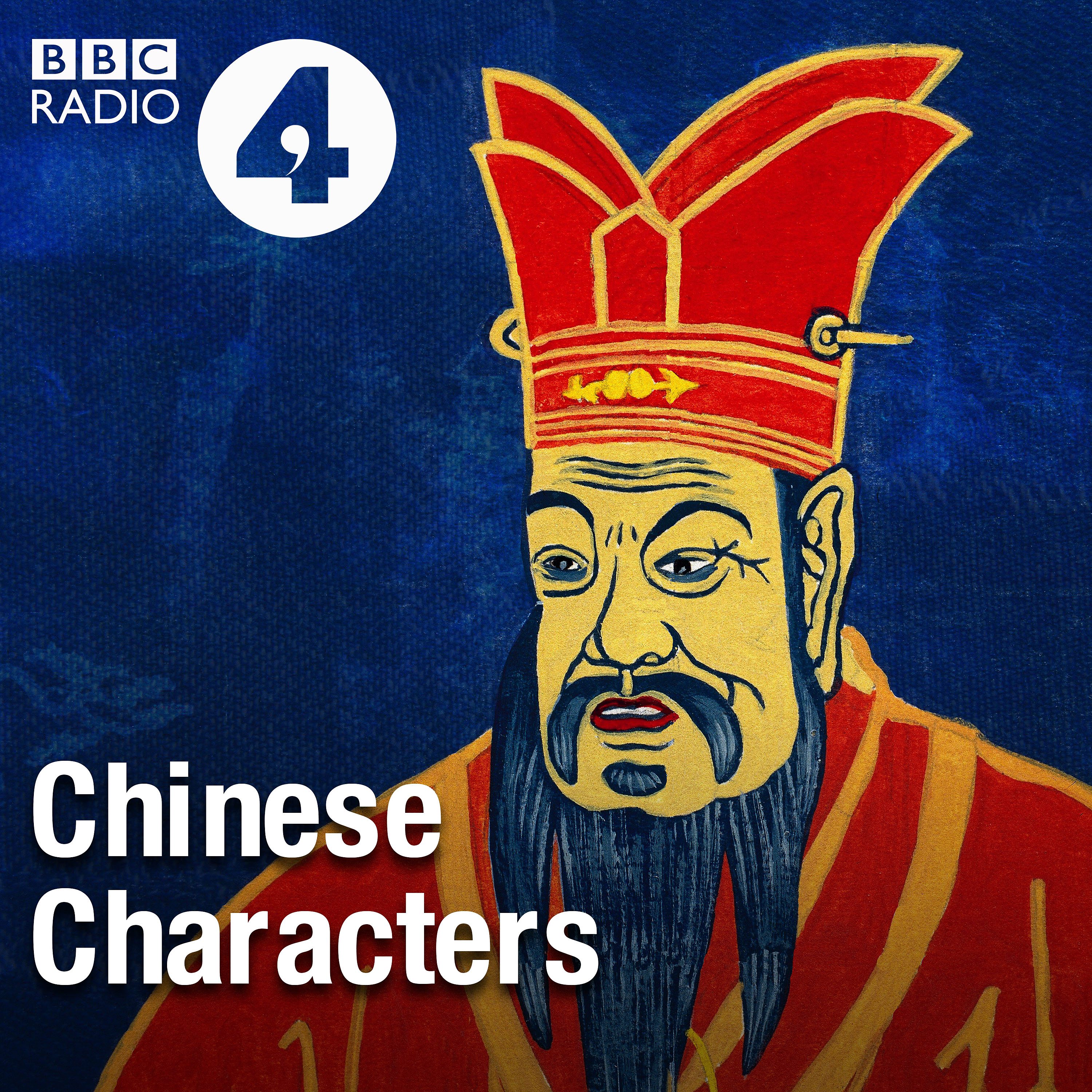
Chinese Characters
Gepresenteerd door BBC Radio 4
Deze podcastreeks brengt de geschiedenis van China tot leven aan de hand van persoonlijke verhalen van invloedrijke figuren. In de vorm van verhalende essays worden sleutelmomenten uit het verleden verkend via de levens van mensen die deze geschiedenis mede hebben gevormd.
Afleveringen
Deng Xiaoping: Black Cat, Yellow Cat
<p>He was nicknamed "the steel mill" for his capacity to just keep going on and on. He was Mao's lieutenant who was purged twice and rose three times, the final time to the very top. He enabled China's economic miracle to happen after 1978 by allowing capitalism to reemerge in the world's biggest Communist country. "It doesn't matter if a cat is white or yellow if it catches mice," he observed. He put down protests with ferocity in 1989. And he negotiated the last piece of unfinished business be
Bruce Lee: Screen Warrior
<p>He may still be the most famous non-western film star in the world. Yet he made only a handful of films in the early 1970s, none of which are artistic masterpieces. It wasn't his acting that made Bruce Lee the first Chinese to conquer global popular culture. Instead, his balletic, choreographed mastery of kung fu provided a new image of the Chinese, not as victims, but as avengers, ready to show their own techniques and customs to the world. Lee was a contradiction; part-European, he spent hi
Mao Zedong: The Man Who Made Modern China
<p>In the early 1920s, he was just a library assistant at Peking University. Yet by the end of his life, he would rule a fifth of all humanity, turn China into a major power, and destroy the lives of millions in a Cultural Revolution. Mao Zedong was the person, above all others, who made modern China. Yet what shaped him? The romantic novels he read in his youth, the years on the run, reading Marxist theory, or the desire to write the story of the Chinese people on a "blank sheet of paper"? Rana
Factory Girls: Modern Girls, Modern Dreams
<p>They came out of the countryside and helped to build China's industrial revolution. In the late 19th century, textile factories started to appear in the Yangtze delta, and working in them, teenage girls and young women. It was a hard life with the ever-present prospect of lung disease or industrial injuries as they wove cotton and silk. Yet there were new horizons too: these young women had money in their own right, the chance to take holiday breaks, and even to venture to the big city, Shang
Cixi: Ambivalent Empress
<p>She rose to power behind the scenes in China's late 19th century imperial court, and became one of the most powerful women ever to exercise authority in the empire. Cixi was a dowager empress, and her influence shaped China through the tragedies of the late 19th century. She prevented her own nephew from launching reforms to modernise China, and endorsed one of the most xenophobic movements ever to convulse China: the Boxer uprising of 1900. Yet she ended up, ironically, as the woman who near
Hong Xiuquan v Zeng Guofan: The Duellists
<p>This was the duel that shaped China. Hong Xiuquan was a poor boy who went into a trance and became convinced he was Jesus's younger brother, with a mission to conquer China. Zeng Guofan was a loyal Confucian bureaucrat who rose up the imperial hierarchy. In the mid-19th century, Hong's visions led him to launch a war under the name "Taiping" - heavenly kingdom of great peace. He created a quasi-state in some of China's richest heartlands, run on Christian principles, imposed on pain of death.
Wang Jingwei: Revolutionary Renegade
<p>He is condemned as China's worst traitor. What made him do it? In 1938, as China was plunged into war, Wang Jingwei defected to the enemy, Japan. Yet in his early life, he had been one of the great figures of the Chinese revolution, second only to the legendary Sun Yat-sen. Wang's story is one of hope for a different Asia, liberated from imperialism, and the betrayal of those possibilities. Wang's decision to defect came at China's "darkest hour" when victory against a mighty enemy seemed imp
Lu Xun: Compassionate Cynic
<p>To create one character who says something profound about the society you live in might be a stroke of luck. To create three suggests you really do have your hand on the nation's pulse. That creator was Lu Xun, widely regarded as modern China's greatest writer. His pithy, astringent short stories showcased figures who held a merciless mirror to China's people: Ah Q, the vainglorious everyman who treats every disaster as a triumph, Kong Yiji, the pathetic Confucian scholar reduced to begging f
Community
Podcast ClubMaak een account aan om mee te praten.
Echt een toffe aflevering, heb ervan genoten! 🎧
Wat een prachtig verhaal, blijf er nog over nadenken.
Blijf volgen, ben fan geworden.
De gast was fascinerend, leerde weer bij.
Deel dit meteen met mijn vrienden.
Dit onderwerp raakte me precies op de juiste plek.
Dit is waarom ik podcast luister, bedankt!
Dit gesprek had uren mogen duren.