

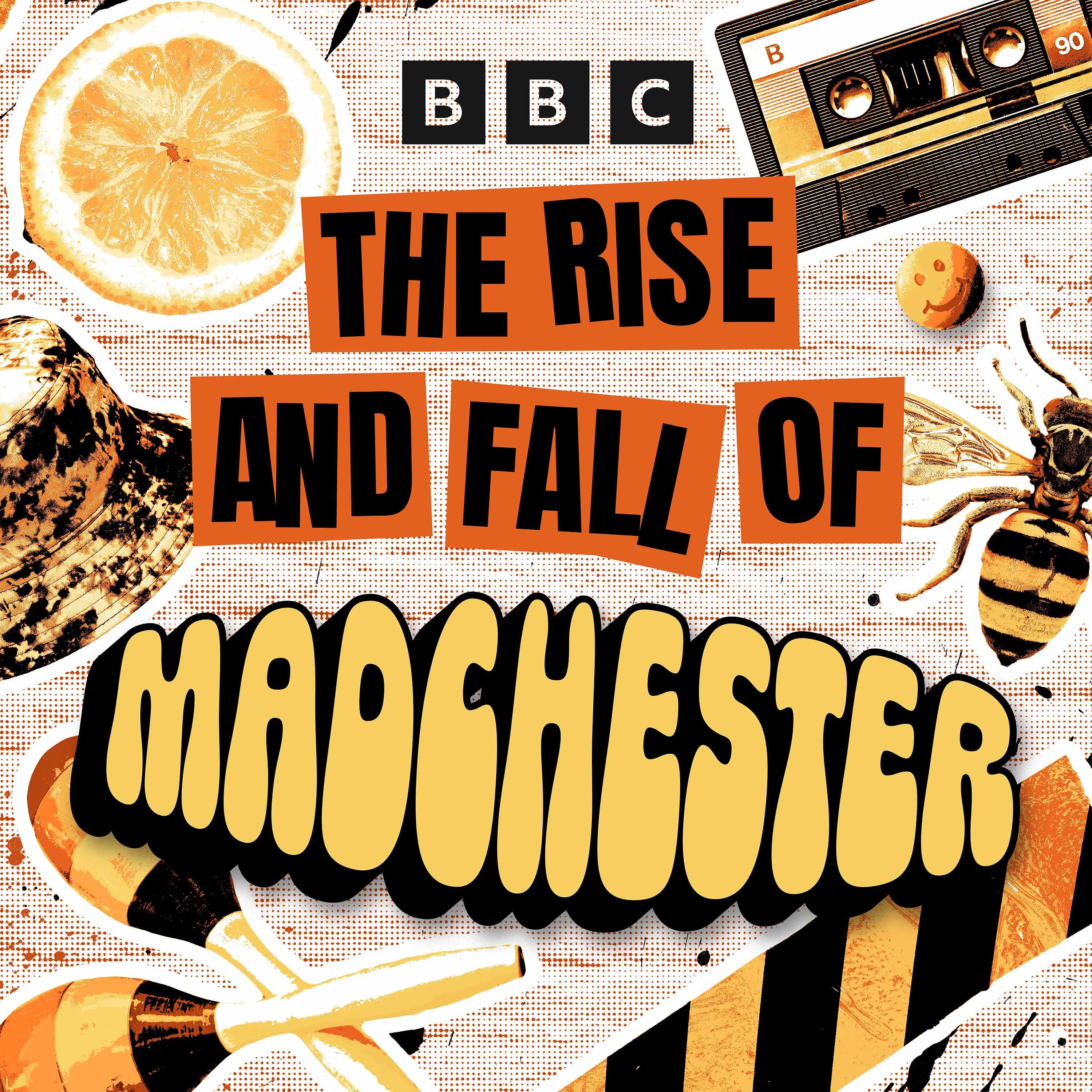
The Rise and Fall of ...
Gepresenteerd door BBC Radio 6 Music
Fan van britpop? BBC Radio 6 neemt je in zijn Rise and fall-reeks mee naar de hoogte- en dieptepunten van een Engelse muzikale scene of icoon. In het nieuwe seizoen word je ondergedompeld in het Manchester van de late jaren 80 en vroege jaren 90. New Order vervelde van een groepje zwartjassen tot extatische nachtbrakers, met in hun spoor The Stone Roses en Happy Mondays.
Afleveringen
8. What the World is Waiting For
<p>As Tony Wilson once told Newsweek Magazine in 1990 - "If there is any idea at all, it is about community and collective strength. There is power in people being lovely to each other."</p><p>It might be more than 30 years ago but today, Madchester both made its mark and left its mark. Madchester did more than just transform the music of its own city – it rewrote the rule book on how a movement could emerge, free of music industry controls, and produce the sort of bands, DJs and records that l
7. Regret
<p>In 1995, after five years of court cases, silence and mounting expectation, The Stone Roses are finally back. The Second Coming has been released, and a Glastonbury headline slot awaits. Then on a rare day off in America, guitarist John Squire falls from his bike and breaks his collarbone. The momentum snaps.</p><p>Meanwhile, Britpop storms the charts. Blur and Suede set the tone and Oasis inherit Manchester’s swagger and carry it into a different decade. Then, on 15 June 1996, a bomb detonat
6. Shoot You Down
<p>Barbados was supposed to save them. In early 1992, The Happy Mondays are flown to the Caribbean to record their next album. Fresh from the success of Pills ’n’ Thrills and Bellyaches, this should be consolidation. Instead, Shaun Ryder drops his methadone at Manchester airport, the studio fills with smoke rather than songs and the budget disappears pound by pound. A sun lounger is sold for drugs. Back home, the gold rush continues. James score a number two single with Sit Down and a wave of ne
5. World in Motion
<p>1990 does not begin quietly. London burns during the Poll Tax riots. Strangeways prison erupts in Manchester. Margaret Thatcher stands outside Downing Street for the last time. Britain is shifting politically, socially and culturally. At the very same moment, Madchester explodes into the mainstream. The Happy Mondays release Step On as smoke rises over the city. Ecstasy fuels a new chemical confidence. Indie and rave collide. What began in dark rooms is now national news.</p><p>Then comes an
4. Loose Fit
<p>By 1989, Manchester is no longer underground, it is now unavoidable. Baggy jeans, bucket hats and loose jumpers become a uniform. Market stalls and record shops replace boutiques and fashion houses. The look travels as fast as the music and the city has found its silhouette. The Happy Mondays record Bummed in a blur of ecstasy and mischief, then quietly redraw the indie rulebook by handing a track to a club DJ for remixing. The Stone Roses release their debut album to modest chart impact, but
3. Twenty Four Hour Party People
<p>In 1985 two Manchester bands release their first records on the very same day. The Stone Roses and The Happy Mondays barely register beyond the city. They are promising, scruffy… and largely ignored. But elsewhere in Manchester, something far more seismic is taking shape. In community halls, tower blocks and semi-legal parties, imported house records from Chicago and Detroit begin changing the temperature in the room. A new chemical arrives and with it a new way of feeling. Strangers embrace.
2. Movement
<p>March 1983. New Order take to the stage on Top of the Pops to perform their new single, Blue Monday. The machines misfire, the sequencer slips and Bernard Sumner glances upwards as if waiting for help that never comes. On national television, it looks like chaos. Within weeks, Blue Monday becomes the biggest selling 12 inch single in British history. Inside the Haçienda, the early nights are sparse and uncertain. The building is vast, expensive and half empty. Almost nobody dances. But beyond
1. Wilderness
<p>Manchester in the late 1970s is a city in retreat. Industry is collapsing and jobs are disappearing. Whole neighbourhoods feel abandoned. Out of that stillness comes a stark, unsettling new sound. Joy Division capture the mood of a city that has lost its rhythm. Their music is tense, mechanical and unflinching. When Ian Curtis dies in May 1980, just as the band stand on the brink of America, it feels like the end of something fragile and important. A month later, Love Will Tear Us Apart is re
Community
Podcast ClubMaak een account aan om mee te praten.
Wat een diepgang, respect voor de voorbereiding.
Deze aflevering zette me aan het denken.
Luisterde op de fiets naar werk, tijd vloog voorbij.
Heerlijk om naar te luisteren, wat een stem ook.
Precies wat ik vandaag nodig had.
Eerst koffie, dan deze aflevering. Perfecte start van de dag.
Echt een toffe aflevering, heb ervan genoten! 🎧
Wat een prachtig verhaal, blijf er nog over nadenken.